
Research
Smart Rail Reliability at TUM Raitenhaslach: Key Takeaways
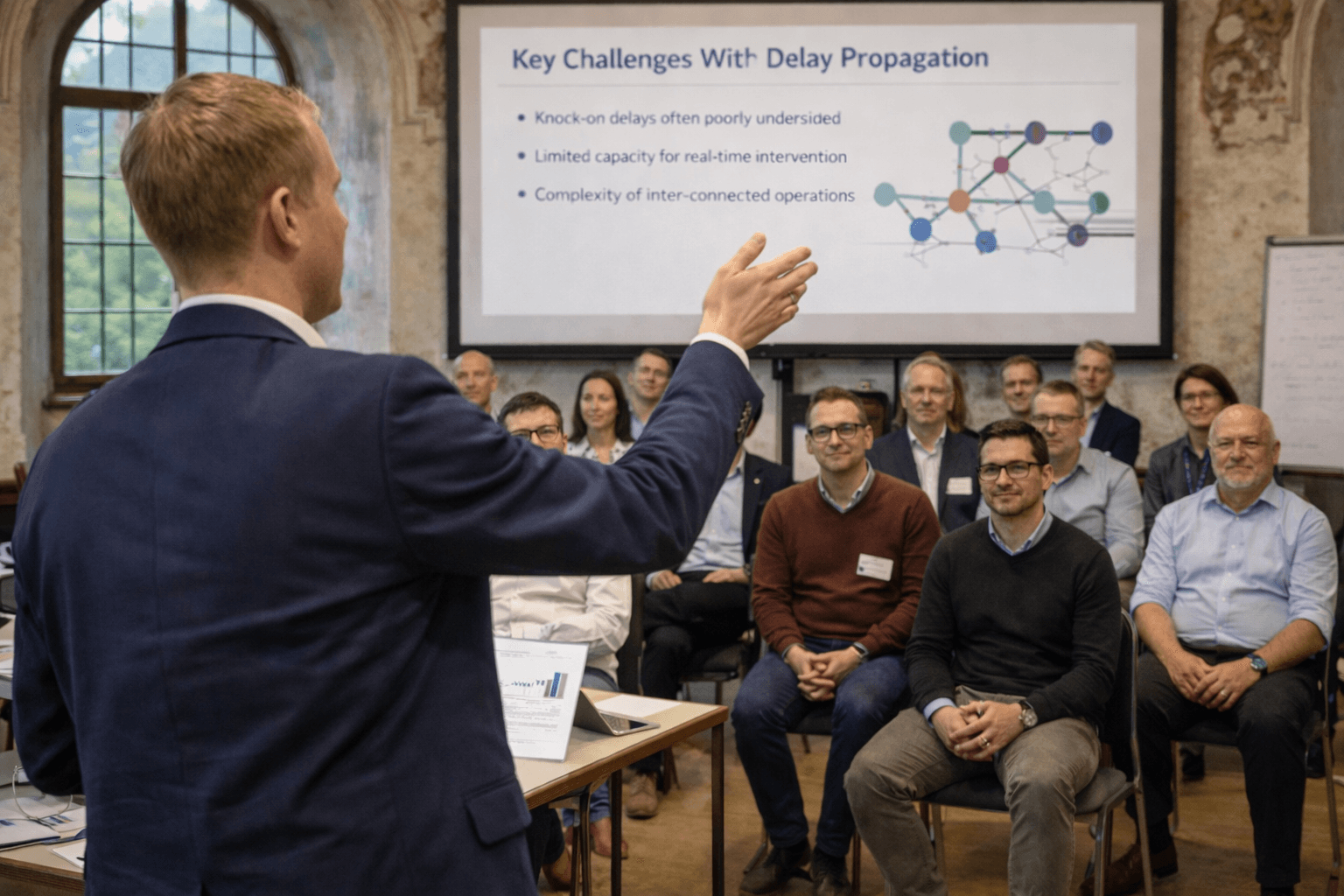
Last week we had the privilege of attending the Smart Rail Reliability Modelling & Capacity Management workshop, organized by Prof. Norman Weik of the Technical University of Munich — the mentor behind Oncron's EXIST programme.
Thirty specialists from across Europe — operators, researchers, and planners from DB, SBB, DLR, TUM, ETH Zürich, and beyond — spent two dense days at the former monastery of Raitenhaslach exchanging insights on service quality, delay propagation, and capacity management. It was exactly the kind of frank, cross-border conversation the rail sector rarely gets to have.
What the experts are grappling with
A few themes surfaced repeatedly and stayed with us:
Infrastructure expansion is the expensive path. Extending lines or adding tracks is slow and costly. Getting more out of existing assets through modern technology is almost always the faster and more affordable lever — and there is significantly more headroom there than the sector often acknowledges.
Knock-on delay is still poorly understood. Even teams with strong data capabilities struggle to reliably trace a knock-on delay back to its primary trigger. Without that causal chain it is very hard to learn systematically, assign responsibility correctly, or intervene early enough.
Disruption management is a persistent gap. Good timetable planning does not automatically translate into good real-time operations. When something goes wrong, the tools and processes to manage the cascade are often insufficient — even in well-funded networks.
Planning assumptions introduce systematic delay. Optimistic runtime parameters baked into the timetable create a structural delay budget before the day even starts. Identifying and correcting those assumptions is a high-leverage improvement no one needs to lay a single metre of new track for.
Why this matters for Oncron
Every one of those points maps directly onto what we are building:
- Conflict chains to connect cause → cascade and make delay propagation legible in real time.
- Pattern detection and causal analysis to surface systematic planning problems before they compound.
- Real-time dispatcher decision support so that disruption management becomes a structured, data-driven process rather than a reactive scramble.
The symposium reinforced that the problems are real, widespread, and not yet solved. It also showed that the community is motivated to move — there is appetite for new approaches, not just incremental refinements.
A big thank you to Norman Weik and the entire organising team for creating such an open and substantive forum. We left Raitenhaslach with new connections, sharper thinking, and fresh motivation to keep building.
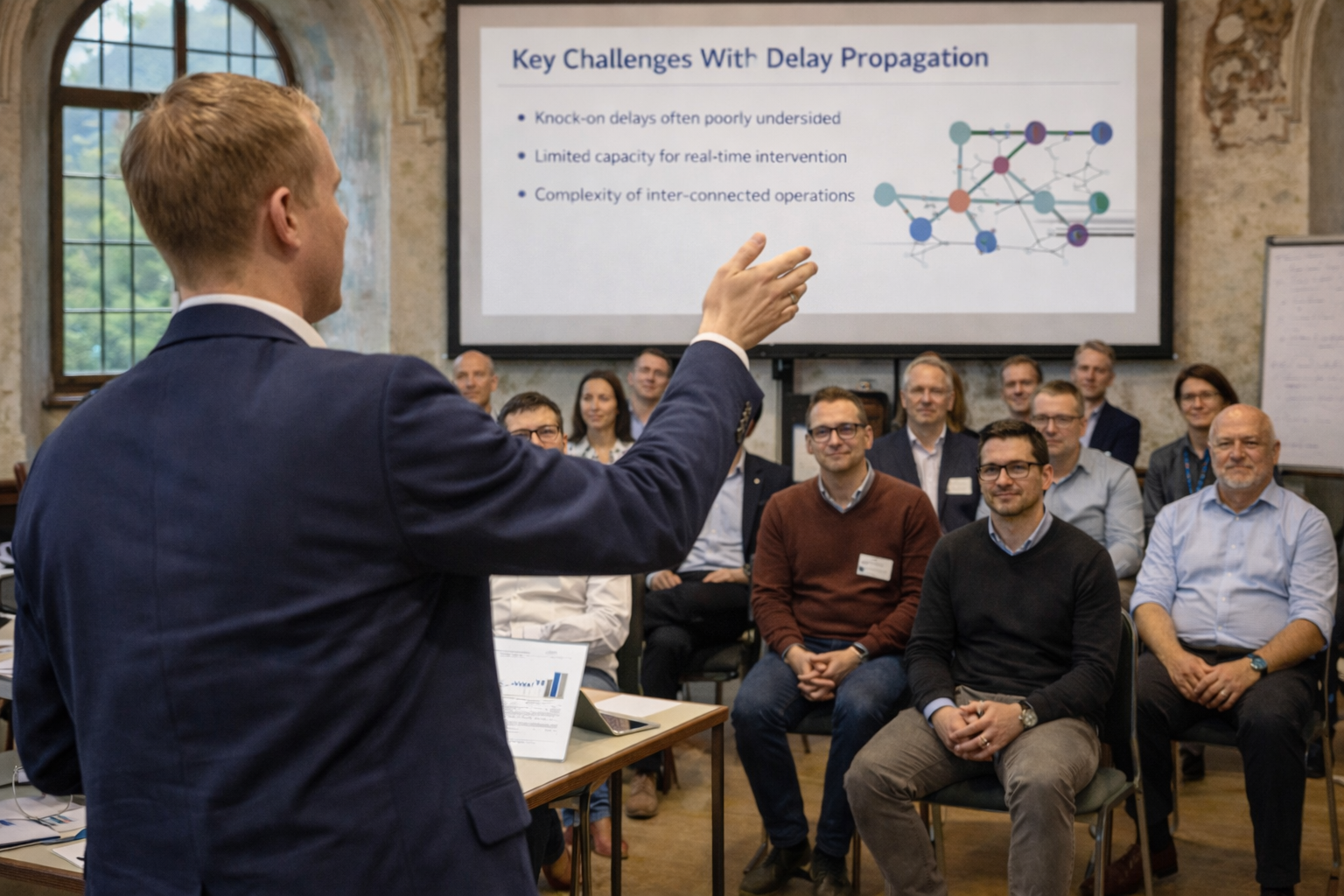
Image: AI-generated illustration